C5 Headphone Amplifier

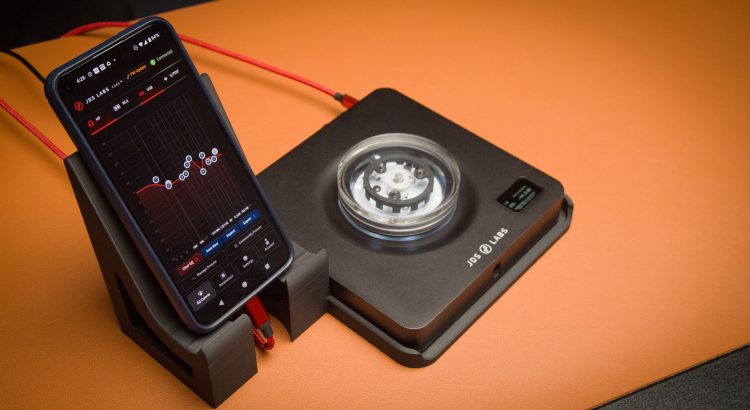
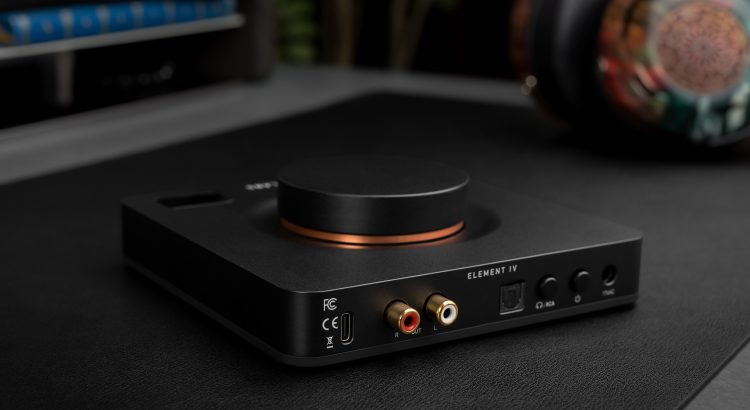
Today we’re excited to announce our new C5 Headphone Amplifier:

C5 Headphone Amplifiers in Red, Slate and Silver

C5 Headphone Amplifiers in Red, Slate and Silver

C5 Production Status

  • Design: 100% complete
  • Engineering Samples: Approved
  • Benchmarks: 100% Complete
  • PCB Assembly: 100% Complete, on a UPS truck
  • Enclosures: In stock, awaiting anodizing February 19-22

Barring unforeseen catastrophic failures, C5 preorders will ship no later than February 28. Review samples and distributor orders will ship on February 22.

Wed., March 13 Update: The C5 preorder sold out this morning. Mass production began two weeks ago, so C5 will be in stock in just 2-4 weeks.

View All Status Updates

Tues., March 12 Update: 99% of preorders have shipped! New Slate C5′s ship immediately. New Red C5′s will ship next Tuesday, March 19.

Mon., March 11 Update: Slate anodizing remains on schedule for completion tomorrow morning. Our anodizer says this batch is turning out as desired.

Fri., March 8 Update: Over 75% of preorders have shipped (all Red and Silver). All Slate preorders are scheduled to ship by Tuesday evening.

Thurs., March 7 Update: We inspected and approved a new batch of enclosures today, and now expect to complete preorder shipments within 3 business days.

Tues., March 5 Update: We have encountered an “unforeseen catastrophic failure” as I wrote on February 16th. The enclosure delay mentioned last week was caused by our local metal finishing shop. Their job is to apply the smooth, blasted finish to C5 (bead blasting). As of last Tuesday, they realized they’d blasted our C5 cases with the wrong parameters. Already one week late, they called on 2/26 and promised to start over and deliver perfect pieces by Thursday, 2/28. All seemed fine, until we anodized those pieces. Our anodizer called this morning apologetically. His shop follows this blog and is well aware of the significance and beauty of C5. Every single piece from the “fixed” batch was not fixed. Anodizing had revealed severe cosmetic defects–all pieces from 2/28 were junk.

I drove to the blasting facility this afternoon and handed them two C5 enclosures: one from the first batch, and one from the 2/28 batch. The production manager was as shocked as we are, and will begin another batch in the morning with strict supervision.

It’s an absolute shame that one shop foiled our ambitions to ship early. As soon as we realized the possibility of failure, we began identical blasting production at a second metal finishing shop, for redundancy.

The Good News:

  • We have a strong supply of raw enclosures; without delays, metal finishing normally takes just 2-5 business days.
  • Over 61.5% of C5 preorders have already shipped

For those affected by the delay (mainly Silver and Slate preorders), we promise to upgrade all USPS First Class shipments to USPS Priority. Please do not hesitate to contact us if we can be more helpful!

Mon., March 4 Update: All Red C5′s have shipped. All outstanding preorders will ship by Wednesday.

Thurs., Feb 28 Update: Enclosure anodizing is in progress, and we still expect to ship on Monday afternoon.

Wed., Feb 27 Update: A large batch of C5 enclosures will enter anodizing by 1PM Thursday (a 1-2 day process). Preorders will resume shipping on Monday afternoon.

Tues., Feb 26 Update: Over 25% of C5 preorders have shipped. All PCBs have been tested and are awaiting final enclosure assembly. Our enclosure finishing contractors called this morning to report a 2-3 day delay, so remaining C5 orders will ship Feb 28 thru March 6.

Design Priorities

C5 is not a response to the Objective2, nor to competitors’ products. C5 began as a fun project in 2012 to build a smarter headphone amplifier to solve the single greatest hindrance we see in DIY audio: the analog volume potentiometer.

C5 is built for portable users who need a small amp with USB recharging, exceptionally low noise, sufficient output power, long battery life, and most importantly, a super fine volume control to handle sensitive headphones and IEM’s.

Analog Potentiometers’ True Performance

I interviewed an electrical engineer in January. He’d applied here after discovering the Objective2, and during our discussion, he asked, “What’s there left to design? The O2 is audibly perfect. How can you build anything better than that?”

Easy, there’s no such thing as a perfect product. Every design has its unique goals and constraints.

Our Chinese competitor says the Alps RK097 analog pots are “still the best” solution, presumably based on low cost and decent benchmark performance. NwAvGuy dismissed digital potentiometers as too expensive to implement with good performance, while acknowledging the major shortfall of the Alps pot he settled on for the Objective2:

 THE CHANNEL BALANCE PROBLEM: Devices with conventional volume controls may have audible channel imbalance at very low volumes [i.e., one side is much louder than the other --JDS]. It’s extremely difficult to manufacture volume control potentiometers that maintain tight channel balance below about -40 dB (referenced to full volume). – NwAvGuy

In this article he briefly describes how imbalance can be resolved with proper excess gain. The excess gain problem is primarily why we’ve custom built cMoyBBs for over five years. That is, setting a suitable gain usually avoids channel imbalance. Usually–until you’re sitting in a quiet room and want to listen at low volumes, or until you try a set of high efficiency headphones. Even at 1.0x gain, you’ll encounter major channel imbalance from your so-called high performance analog headphone amplifier in such situations.

Let’s take a look at channel balance of c421, measured by the dScope as I slowly turn the knob from maximum to minimum position:

c421: Severe channel imbalance

c421 Channel Balance (Alps RK10J, 3B Taper)

The yellow line represents the left channel; pink represents the right channel. Lines resting exactly on top of each other indicate audibly perfect balance (no deviation in L and R volume).

c421′s Alps RK10J imbalance grows after just -12dB. The problem becomes severe by -22dB, and it’s quite useless by -30dB. If you called or emailed in the past year, you know we didn’t recommended c421 for IEM’s. If you tried c421 without seeking our advice, you either listen above the imbalanced region, or you returned the product.

Here’s an Alps RK097 implemented in the cMoyBB (Objective2 uses the same series potentiometer):

cMoyBB / O2 Channel Imbalance (Alps RK097, 3B Taper)

cMoyBB / O2 Channel Balance (Alps RK097, 3B Taper)

Channel balance of the RK097 fairs much better, due to its larger mechanical size. You can see 1-2dB deviations at -25dB, with otherwise decent balance down to -40 to -50dB. And that’s where things get nasty. I only managed to turn the knob at a single point when the dScope cycled to measure the imbalanced region, which is exactly the problem IEM users face. You can either turn the knob to mute, or to a point of imbalance, or to a level louder than you’d prefer.

Even with the RK097, we still receive a few emails and phone calls each month about channel imbalance. So what good is a HiFi amplifier when it actually hurts your listening experience?

Going Digital

For years, audiophiles feared digital volume controls. Software based digital volume control is the worst, causing you to “lose bits”–the audio signal itself is digitally divided and becomes less precise. Bad!

Early digital potentiometers solved the basic mechanical problems of analog potentiometers. A digital potentiometer is electrically equivalent to an analog potentiometer. Both feature High, Low, and Wiper terminals. The potentiometer is mechanically or digitally set to determine the ratio of High:Low resistance. However, bad digital pots added a large amount of capacitance to the Wiper, and thus, audiophiles frowned at the resulting THD+N (often 0.1% or worse).

It’s 2013, and it’s finally time to say goodbye to the analog potentiometer. C5 features 64 steps of audibly perfect digital attenuation:

C5 Channel Balance: Atmega168A + DS1882

C5 Channel Balance (DS1882 + Atmega168A)

C5 presents only +/-0.1dB of deviation all the way down to -50dB, and only +/-0.55dB at -60dB! [Yes, you can only see 28 steps here, as I'm manually racing the dScope test duration by making larger volume transitions.]

In other words, C5′s digital attenuation achieves perfect audible balance at volumes -20dB lower than the analog Alps RK097. Remember that audio sounds twice as loud every 10dB, so this is no small improvement.

Reference Level Performance

C5 began as an experiment, and even I was skeptical that we could outmatch c421′s THD+N with a digital potentiometer. Thus, we bought a dScope III and set no project deadline and no budget. We’d either continue shipping c421′s, or continue experimenting.

C5 PCB

C5 Printed Circuit Board

By January 2013, it was clear that C5 was electrically complete. We quietly put C5 PCB’s into production instead of another batch of c421′s. C5 had not only hit our THD+N goal, it had matched the O2!

Specification C5 Measurement
Frequency Response  +/- 0.02 dB
THD+N (20-20kHz, 150 Ω) 0.0009%
THD+N (20-20kHz, 32 Ω) 0.0045%
Noise -105 dBu
Crosstalk @ 150 Ω -67 dB
Inter-channel Phase @ 1kHz +/- 0.01°
Channel Balance +/- 0.55 dB, all volume positions
Max Output @ 600Ω 4.146 VRMS
Max Output @ 150Ω 3.337 VRMS
Max Output @ 32Ω 1.010 VRMS
Power Supply 14.0 Vpp
Output Impedance 2.2 Ω
Battery Run Time 11-14 Hours
Charge Time 2 Hrs to 80%, < 4 Hrs to 100%
Operating Temp –40°C to 85°C
Operating Humidity 0 to 85% Rel. Humidity
Dimensions (excluding switches) 99.5 x 61.5 x 14.0 mm (LxWxH)
Weight 4.2 ounces
C5 THD+N Measurement @ 150 ohm load

C5 THD+N Measurement @ 150 ohm load: 0.0009%

C5 Idle Noise

C5 Idle Noise

C5 Frequency Response (Flat)

C5 Frequency Response (Flat): +/- 0.02 dB

C5 Frequency Response (Bass boost)

C5 Frequency Response (Bass boost): +6.5dB @ 80Hz

Achieving high output power was not a primary goal of C5. Referring to its design objectives, portable users do not need inordinate amounts of power (note: P = V^2/R); you need run-time and just enough power. C5 has equal output power to that of c421, and we know from measurements and subjective results that c421 and C5 are well suited to driving 90+ dB/mW headphones. IEMs and common 32-250 ohm dynamic sets are okay for C5. It’s not meant for your planar orthodynamics. Therefore, instead of setting unnecessary supply voltage and output power, we set adequate supply voltage for moderately demanding headphones and achieved run-time of 14 hours.

Dual LDO Supply Regulation

C5 builds upon c421′s proven power stage by adding cutting edge TPS7A4700 and TPS7A3301 regulators to the supply rails. Hats off to HiFiDuino’s blog post for catching my attention back in September.

We wanted to place LDO’s in c421, but there was no way to control them, and without control, unsynchronized LDO’s produce unsafe turn-on transients. C5 is smarter than c421, so its firmware simultaneously enables the positive and negative LDO’s after the rest of the amp has initialized. You hear only a safe turn-on transient with C5, and reap the benefits of ultra-low supply noise.

Features

  • Digital Stepped Attenuation (63 steps + mute)
  • Dual Gain: 2.3x or 6.5x, MOSFET controlled
  • Bass Boost: +6.5dB @ 80Hz
  • 20-Minute Low Battery Indication
  • 0.1% Thin Film Resistors
  • 1200mAh, 3.7V Li-Ion Battery
  • Smart USB Charging
  • Ultra Low Noise +/-7V rails
  • 3.5mm Input and Output Jacks
  • Gold Immersion, 4-Layer Printed Circuit Board
  • Atmega168A MCU w/Opensource Arduino Firmware
Feature How to Use
Volume Hold volume lever left to decrease volume, or right to increase volume.
Gain Push volume control to toggle high/low
Bass Boost Toggle up for normal audio, toggle down for bass boost

A single LED conveys all of C5′s behaviors:

Amplifier State LED Status
Off Off
On Solid Green
Low Battery Flashing Green
Charging Blue


Opensource Firmware

C5 Proof of Concept

C5 Proof of Concept

The C5 proof of concept began as an Arduino Pro with messy wires coupled to a c421: DIY style.

Writing firmware for a digital potentiometer is surely a hurdle for many in the DIY audio community. In pursuit of retiring analog potentiometers in DIY HiFi, we’re releasing C5′s firmware under the CC BY-SA 3.0 license. Note that a 6-pin header and ISP programmer are required to write to C5. Enjoy!

Happy 2013!

Happy New Year, everyone! 2012 was by far our best year ever, at 430% revenue growth over last year. Incredible!

No surprise to us, “Erik” at Headfonia.com named the O2+ODAC combo his personal Product of the Year:

“I have heard and seen more gear in 2012 than in all the years before combined. For me, the rise, and subsequent disappearance, of NwAvGuy has probably been the most prolific event this year. Like it or not, the release of his maximum-value Objective2/ODAC combo (designed in 2011 but properly distributed in 2012) really shook up the scene and therefore deserves it’s place as my personal Product of the Year 2012…”

Well put. While we can’t claim absolute responsibility here, we ramped up production of the Objective2 and O2+ODAC combos in 2012 and the effect has been nothing short of amazing. NwAvGuy completely changed our business plans for the year, as well as my perspective on product development and customer recommendations. As the Objective2 gained popularity, we gained even greater respect for NwAvGuy’s contributions to the DIY scene, especially in the way of subjective bias.

Objective2, Black Edition

Objective2, Black Edition

A little surprise: Yes, we have black O2′s and O2+ODAC combos in stock. These have been available for a while now upon special request. We’ll add greater store visibility for the Black Edition O2 as soon as our knob supplier catches up.

Inventory Day

The end of the year is peak season for us, and that means two things. First, our production team is as busy as Santa’s elves. Second, we’re preparing for tax season. Part of this preparation is an annual Inventory count, in which we count everything in the office: chairs, computers, soldering irons, circuit boards, resistors, capacitors, IC’s, etc…

On the flip side of this enormously busy month, it’s equally important for us to reinvest spare cash in new equipment. We’d already acquired a CNC and laser engraver back in the summer. So in the name of NwAvGuy, we made one final acquisition in December–a PrismSound dScope Series III audio analyzer.

Our new dScope Series III Audio Analyzer

Our new dScope Series III Audio Analyzer

The dScope III is an amazingly powerful tool, which enables us to continue developing great products, with or without NwAvGuy.

We may find other uses for the dScope, aside from R&D. Rockford Fosgate ships unique test performance sheets with some of their car audio amps. Maybe some of you guys would like to see actual printouts of your new amplifier’s output? Tell us!

Thanks to everyone for another terrific year!

Cyber Monday at JDS Labs!

Today is Cyber Monday, so we’re excited to offer free shipping! Terms are simple:

  • Free shipping applies to all orders weighing 3+ ounces, which includes all of our DACs and headphones amplifiers
  • Orders placed with free shipping will be mailed via USPS First Class or USPS First Class International. If your order is too heavy for First Class mail, we will upgrade your shipment to the next fastest shipping method.
  • Shipping insurance remains mandatory for international orders over $75 USD
  • This offer applies only to orders placed on Cyber Monday, November 26, 2012 from 12:00AM to 11:59PM Central Standard Time (UTC-6). No exceptions.


Digital Audio vs. DPC Latency

Quick note: Our office will be closed this Thursday and Friday while we spend time with our families for the Thanksgiving holiday. Orders placed Nov 22-23 will ship on Cyber Monday.

We need to thank Steve Guttenberg for his fantastic review last month. Site traffic spiked that week, crippling my blogging time as I pitched in to help with production. That overtime taught me a painful lesson in October–don’t touch aluminum splinters!

DPC Latency

Saving you from the long string of events which led to this discovery, this story is brought to you in part by a buggy new office PC and hours of Googling…

If you’ve spent any considerable amount of time listening to music from your computer, you’ve probably heard glitches in the form of a pop or brief “looped” playback. Although increasingly rare, these problems are not extinct.

Pops and glitches don’t exemplify reference grade audio, and a hardcore audiophile doesn’t even listen to music from a computer. But that’s beside the point. Most of you do use your computer for music listening from time to time, and it would be nice to understand why these glitches occur.

Fortunately, Thesycon offers a tool to measure DPC Latency in real time. DPC Latency is essentially a number which can indicate how much time has elapsed since the soundcard (or DAC) last received a packet of audio data. If too much time goes by before the next audio packet is sent, the sound system has a digital heart attack. It skips a beat and loops whatever audio data was last received.

DPC Latency of a JDS Labs workstation

DPC Latency of a JDS Labs workstation

Thesycon says that DPC latency below 500µs is sufficient for “real-time streaming of audio and/or video without drop-outs”. Next time you hear audio stuttering, you can measure the effect as you experiment with solutions.


Going Black

Here’s a production lesson we learned over the summer: Black anodizing looks better than silver, and it’s easier to engrave.

Engraving plain aluminum (“silver”) parts requires a special type of spray paint, which costs $70 per can. The parts must be cleaned, sprayed, dried, and then engraved at a staggeringly slow speed on the laser engraver. Then we rinse off the spray paint to clean the parts. It’s slow.

Engraving black anodized aluminum is much friendlier. We place parts in the engraver and set speed to maximum. Finished.

c421 Black Edition

Anyway, Nick has done another fantastic job transitioning c421 case production to our in-house CNC!

The c421 Black Edition actually marks a small internal change. In response to In Ear Matters review in June, we swapped output ferrites from an 11 ohm part to a 2 ohm part (PCB has not changed). It’s an extremely subtle change which can be made to any c421. Black endplates are also available as an upgrade kit for current c421 owners.

Black ODACs

Similarly, our Standalone ODAC and RCA Standalone ODACs are also now built primarily in black.

ODA Update

If you know about NwAvGuy’s ODA project, you already know as much as we do (that is, not much). Judging by his blog, he’s taking an extended break. That’s all we know for now.

Backorders and New Website

First of all, we published a huge site update last night. JDS Labs no longer relies on the PayPal shopping cart!

We’ve been testing and revising the new site for 2 months. If you see anything out of place, do not hesitate to send us a note.

ODAC Backorders

Short Story: ODACs began shipping at 11am yesterday.

Long Story: The second batch of ODAC boards were scheduled to arrive about 2 weeks ago. They did arrive on time, but every single board was defective due to a production error. This wasn’t our mistake, but a PCB production issue which affected 100% of ODACs supplied to every single distributor worldwide. Ouch.

Amazingly, the ODAC assembler managed to fix 1500 boards in just 1 week. A+ to them!

We finally received a partial shipment of ODACs at 11am yesterday, July 31 (more arriving Friday). This gave us only five hours to assemble, test, and ship 5+ weeks backorders…

We managed to ship 2 weeks worth of backorders by the end of the day. If our site listed an arrival date of “July 31″ when you ordered, we’re doing everything possible to ship today.

While we’re busy shipping backorders, here are a couple ODAC pictures taken last Friday:

RCA Output ODAC

Upcoming 49mm ODAC Case (for orders after July 27)

Endplate Experiments & RCA Jacks for ODAC

** Scheduled Maintenance: We’re moving our server tomorrow night at 1:00AM CST, Saturday, July 14th. Anticipated downtime is 1-4 hours. JDSLabs.com may be difficult to access in some parts of the world for the next 24-48 hours while our new IP address propagates. **

CNC Experiments

Nick has spent the past three weeks making noise, breaking drill bits, and splashing super fun blue coolant all over the office. Most people don’t pick up mechanical engineering and machining as new “skills” in just three weeks, but we do what we have to here.

First batch of reasonable test parts, despite artwork mistakes and over-sized screw holes

With the basics of CNC’ing out of the way, our attention has turned back to the reason we bought the CNC in the the first place. We want brilliant quality, and we want our parts now.

We’ve specified brushed aluminum on our endplates since they were first designed. It turns out that most aluminum suppliers do not offer brushing. The process is a time consuming and challenging task even for most machine shops. That was a disappointing discovery!

Our endplates will still be brushed, but this sourcing realization led us to experiment with the aluminum. The test pieces shown above were machined at our shop on Friday afternoon, then plated on Monday morning in downtown St. Louis. Clear alodine and black anodizing finishes both look fantastic. And it was all done in under 2 business days. :-)

O2+ODAC Rear Panel with 3.5mm Output

Rear B2-080BK endplate with 3.5mm ODAC output

Although we don’t recommend that you install a 3.5mm output jack on your O2+ODAC, some customers have requested to do so anyway. This is for you: Machined O2+ODAC Endplate w/3.5mm output. These are made from stock endplates included with the Box B2-080 cases, thus, the price is lower than other endplates.

RCA Jacks for ODAC

RCA jack on an O2 Endplate. Hey, it fits!

Okay, this isn’t an ODAC or even a reasonable device. But it is a proof of concept for our Standalone ODAC w/RCA outputs.

We’ve avoided RCA outputs on the Standalone ODAC for several reasons. RCA jacks take longer to assemble and cost more than a 3.5mm jack, but this has been irrelevant to our decision.

We haven’t offered RCA jacks on the ODAC due to virtually identical performance: Why complicate a product with multiple variations and increased build cost at no benefit? The 3.5mm jack on the ODAC circuit board is wired to the same line output header as used by RCA jacks. Some customers have asked, “Aren’t 3.5mm cables more lossy than RCA?”. As NwAvGuy has stated, characteristic impedance is a non-issue in unbalanced audio systems. There are no impedance mismatches to be concerned with, and there are no significant losses resulting from the use of a 3.5mm cable. Crosstalk might change negligibly (1-3dB), but overall, it’s a myth that RCA cables are less lossy than 3.5mm cords. Case in point, why would NwAvGuy (an audio benchmark and measurement fanatic) have designed the ODAC with a 3.5mm jack if it were “lossy”? He wouldn’t have! I’m sure NwAvGuy can provide benchmarks if badgered.

3.5mm to RCA Cable

3.5mm to RCA Cable

Moreover, you can use a common 3.5mm to RCA cable for direct connection of a 3.5mm device to an RCA device.

With all of that said, it’s easier to build products customers want, than to convince everyone that what we’re building is the best solution.

So last week we set out to fit RCA jacks into our Standalone ODAC enclosure. I had briefly collaborated with Stefan of Head ‘n’ HiFi earlier this year on the Standalone ODAC case. We’d been asked by NwAvGuy’s contractor to lead the design and distribution of a standardized ODAC case for the DIY community. I wanted ultimate enclosure quality, and was willing to wait until late July for a custom case fabricated in the USA.

However, Stefan wanted cases immediately, and didn’t think he could fit RCA jacks into our thin case, with only 10mm to work with (a typical RCA jack is 9.5mm). Stefan’s a nice guy, but we had to agree to disagree on our design goals. Product excellence is more important than expedited delivery and cost, especially when a product will stick around for years to come.

Despite the tiny clearance, we’ve managed to design ODAC endplates that will accept 2x RCA jacks and still fit into our thin ODAC enclosure, without losing ground isolation. This is only possible due to a beautiful, black anodized finish. More pictures are coming soon. For now, imagine the gold RCA jack pictured above on our Standalone ODAC.

ODACs are scheduled to arrive July 19-25. All Standalone ODACs will ship by the end of July.

Setting Up Shop

Each Friday I realize how much we’ve accomplished over the week, and wish I had more time to share the news. This entire month has been huge. In trusty bullet point format, we’ve recently:

  • Moved into a new 900 sq. ft. office in Glen Carbon, IL
  • Shipped several hundred ODAC preorders
  • Hired ‘Jimmy’, a new solder technician
  • Added two massive new machines to the shop
The office is still a mess, but here are couple pictures as we moved in:

Engineering and “Business” Workstations

Semi-Automated Shipping Table

Stepping up Production

First of all, ODAC looks as awesome as it sounds, so we were eager to get these out the door and into your hands.

Standalone ODAC

After shipping the first 100 ODACs, our machine shop informed us that they were 1 week behind on ODAC endplate production. “Okay”, I told them. Rushing a job tends to compound problems, as frustrated workers make more mistakes. I flew to California that weekend and visited the shop Monday afternoon. They were doing excellent work, so we waited.

Around this time, we began receiving upwards of five e-mails per hour from customers requesting shipping updates. To keep the story short, 75% of our machined endplates arrived late, in a series of small shipments over a course of 4 weeks. The final box of O2+ODAC endplates shipped this morning.

Nice, Smooth Edges – O2 Front Panel from California Machine Shop

Delays forced us to reevaluate how we handle production. Every machine shop delivers their own mix of quality, cost, and lead time. In two years, we’ve found several excellent machine shops, but none who can build what we want either as fast as required, or as well as required. Balancing cost/quality/time is impossible when you need low cost, high quality, and delivery NOW!

We came up with one daunting solution: If we can’t find a machine shop that meets our customers’ needs, let’s make our own.

Will a 700lb CNC fit through the front door? Yes!

The first challenge was getting a 700lb CNC into the office. After we learn how to use it, this machine will produce our endplates from raw metal.

We’re stocked up on endplates for the summer. This gives Nick has a few weeks to overcome the second hurdle of learning the CNC. He’s already come a long way:

Nick’s Early CNC Attempts – Making progress! Screw holes and edges not programmed.

Machined parts come out of a CNC looking plain, as you can see in the top piece. We print artwork to the parts using a laser engraver:

If you want something special on your c421, O2, or ODAC, just ask. Custom engraving on any new amp or DAC is free.

ODAC Orders

PREODERS: We shipped 100% of ODAC boards and Standalone ODAC preorders this week. Most O2+ODAC combo preorders have already shipped. All remaining orders will ship upon arrival of rear endplates (early next week).

NEW ORDERS: We secured the largest batch of ODACs in the world, but demand has exceeded everyone’s expectations. Once sold out, the next batch will arrive in late July.

Raffle Results

Special thanks to everyone who contributed to the 2012 Challenge Tanzania Raffle. We helped raise over $500 in charitable donations. Prizes have been shipped to the lucky winners, #121 and #51.

Challenge Tanzania 2012 – Charity Raffle

This week I was asked if we could provide support in raising donations for a charitable cause in Africa, Challenge Tanzania 2012. Filling ODAC orders and moving into our new office made this past week by far the busiest of the year, so I flagged the email when it came in on Tuesday morning. Flagged emails at JDS Labs either get read in weeks, or never at all.

At the end of the day, I found 2 minutes to read through that email, which most people would consider spam. The author was a past customer and it was immediately apparent that he follows our blog, and understood that we might not reply. But more compelling was the cause. He’s helping children who lack food, water, and access to education.

Matt volunteers for Challenge Worldwide (registered UK charity #1130522). Donations will be used to provide necessities at St Lazarus School in the Kibera Slums, Kenya, as well as to the Makat Village Community (Maasai) in Lake Natron, Longido District, Tanzania. Volunteers personally finance their expeditions in full; donations are applied directly to the causes.

Charity Raffle

To bolster interest, Matt has personally setup a “JDS Labs Charity Raffle” page. Support Challenge Tanzania 2012 and you will have a chance to win one of our great amplifiers! Again, prizes are graciously financed by Matt and all donations will benefit the causes of Challenge Tanzania 2012.

Complete descriptions and goals of the Challenge Tanzania causes can be found on the donation page.

Preparing for May – ODAC and New Office

ODAC Progress

Those seeking to retrofit their O2′s with an ODAC can now preorder the O2+ODAC rear endplate for the Box B2-080 enclosure:

Not sure why this rendering is so dark (Nick?!). They’ll match our O2 Front Plates.

We’ve switched to a specialty machine shop based in Silicon Valley. Artwork on new endplates will be laser etched instead of silkscreened. Cost is slightly higher, but overall machining quality of our O2 and ODAC plates will be better than ever.

All ODAC options are now available for preorder:

  • Assembled ODAC Board
  • Standalone ODAC
  • O2+ODAC Combos

The assembled ODAC board is sold barely above wholesale price, at the request of NwAvGuy’s manufacturer. This is to keep the DIY project cost low. Longer explanation here.

We’re Moving!

Our case manufacturer asked for a favor earlier this week. He’s speaking today at a big corporate meeting and needed to show off a customer with “the most interesting application”. We provided a short summary:

Growing so quickly hasn’t been easy. We’ve streamlined most tasks to keep up with production and shipping, but now we’re out of space. So, we’re moving 1 mile down the road to a new office in Glen Carbon, Illinois.